Water Management ERP
Offline-first desktop operations suite for a packaged-water distributor — inventory, invoicing, orders, and maintenance, zero cloud dependency.
Role
Solo freelance systems & ERP developer — requirements through go-live
Timeline
6 weeks, June–July 2025
Stack
- Tauri v2·
- Rust·
- SQLite·
- React·
- TypeScript·
- Next.js
The problem
A packaged-water distributor in Ulundurpet was running inventory, invoicing, and delivery tracking through a mix of paper counters and phone calls. Every 20L canister leaving the plant, every refill, every maintenance visit lived in someone's memory or a notebook — and the plant's internet connection was too unreliable to trust a cloud tool with the day's operations.
The constraint that shaped everything
Zero cloud dependency wasn't a preference, it was the requirement. The plant floor has no guaranteed connectivity. That ruled out anything built cloud-first with offline as an afterthought — the data model had to be local-first from the schema up, with SQLite as the source of truth and no code path that assumes a server is reachable.
What got built
A Tauri v2 desktop app — Rust handling IPC and business logic, React/TypeScript for the interface, SQLite for persistence. It covers the full loop: canister inventory counts, invoice generation, purchase and sales flows, maintenance logs, and dashboards/reports the owner actually checks. Every screen works with the network off, because on the plant floor it usually is.
What's still open
The one gap that's real and stated plainly: if the same record gets edited on two offline sessions before either syncs, resolution today is manual. A vector-clock-based merge is in development to close it — but shipping the 6-week version with a known, documented limitation beat shipping a 14-week version chasing an edge case that hadn't happened yet.
Delivery
Solo-built, single point of contact with the client throughout, delivered in 6 weeks including on-site deployment and training the actual people who'd run it — not a handoff document, a walkthrough until they were confident.
Project Gallery
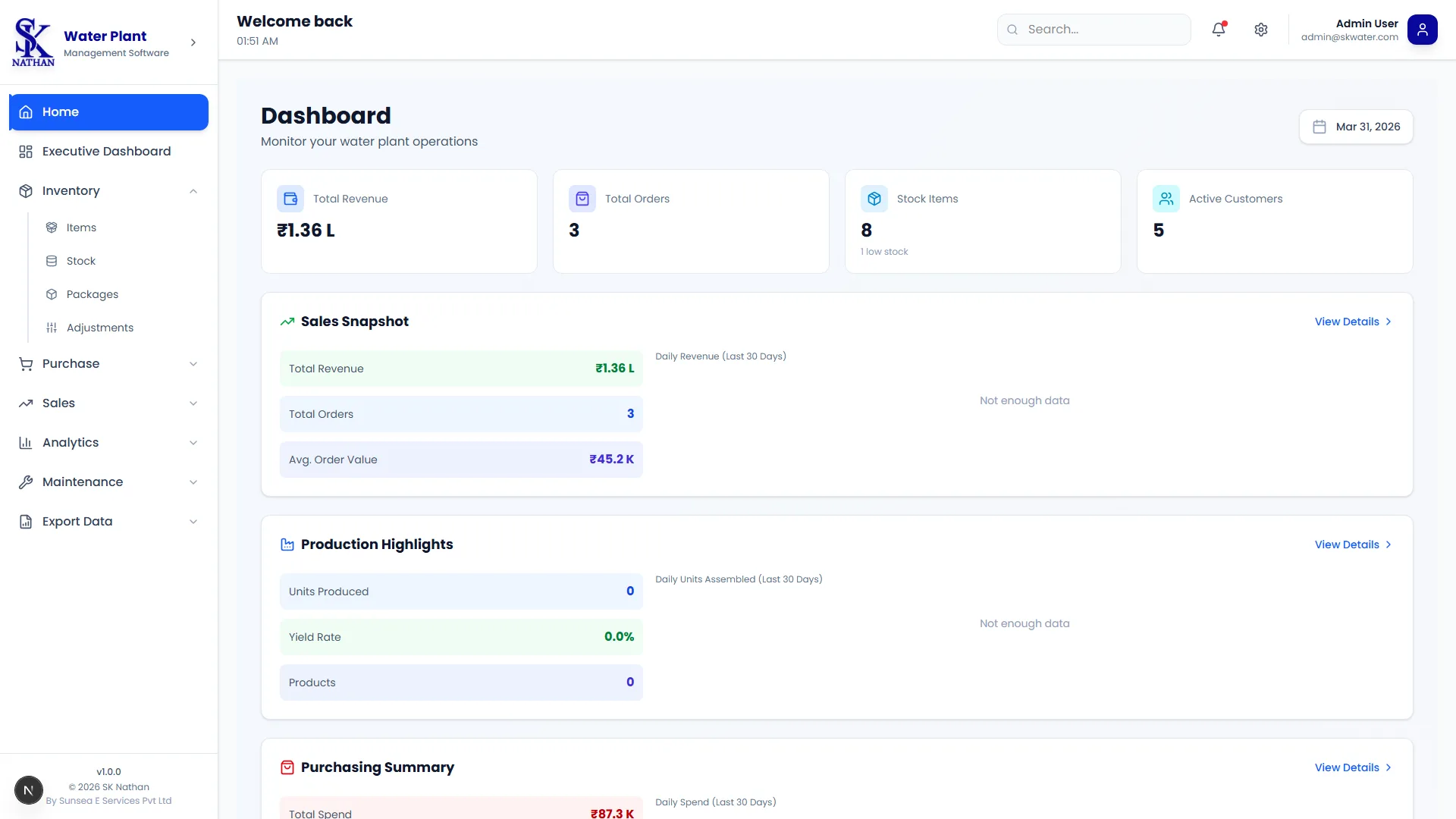
01 // OPERATIONS DASHBOARDWater Management ERP Operations Dashboard
Real-time 20L can inventory balances, water production rates, and active dispatch deliveries.
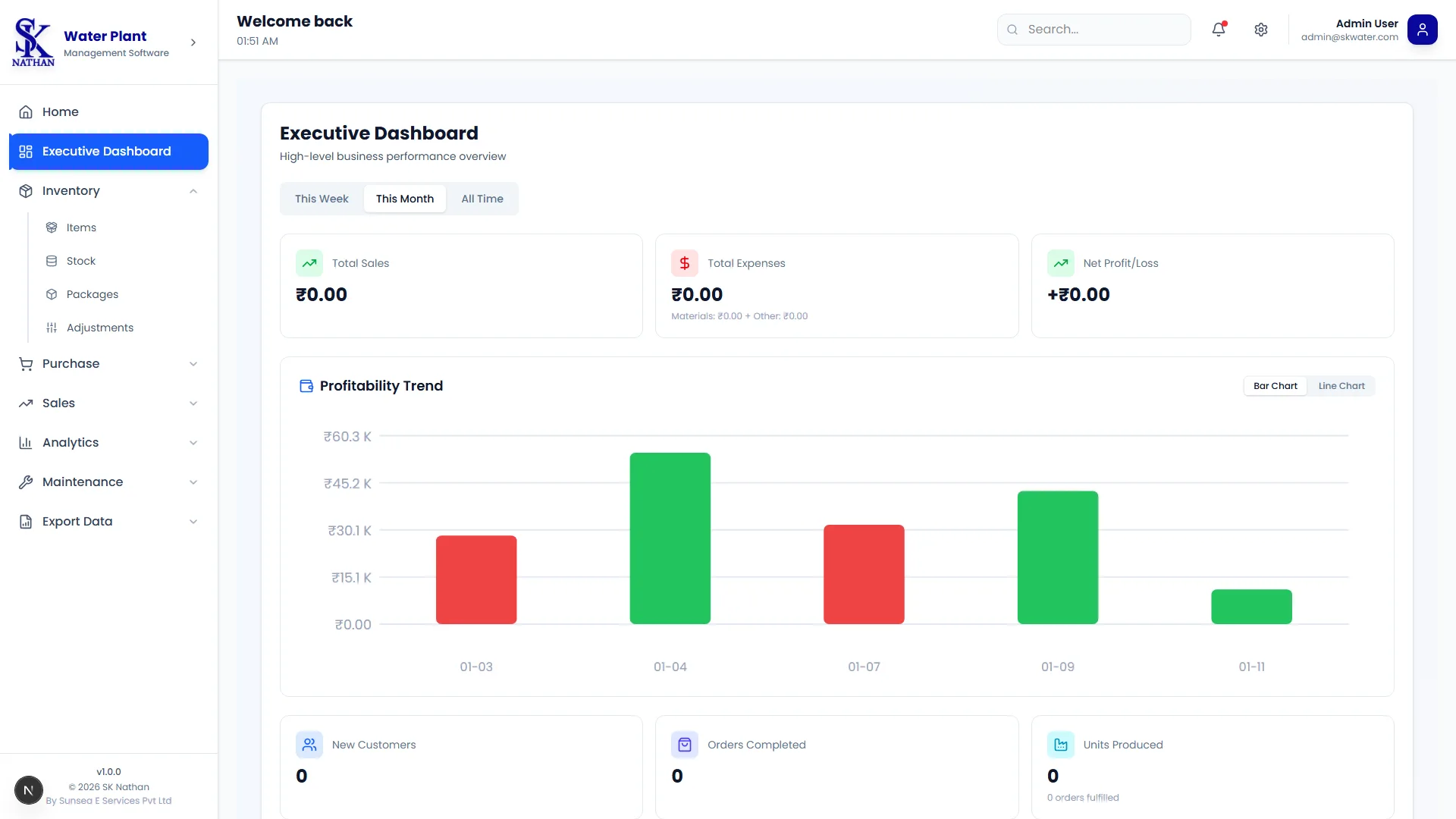
02 // EXECUTIVE VIEWExecutive Financial Summary
High-level KPI metrics, revenue trends, and operational efficiency overviews.
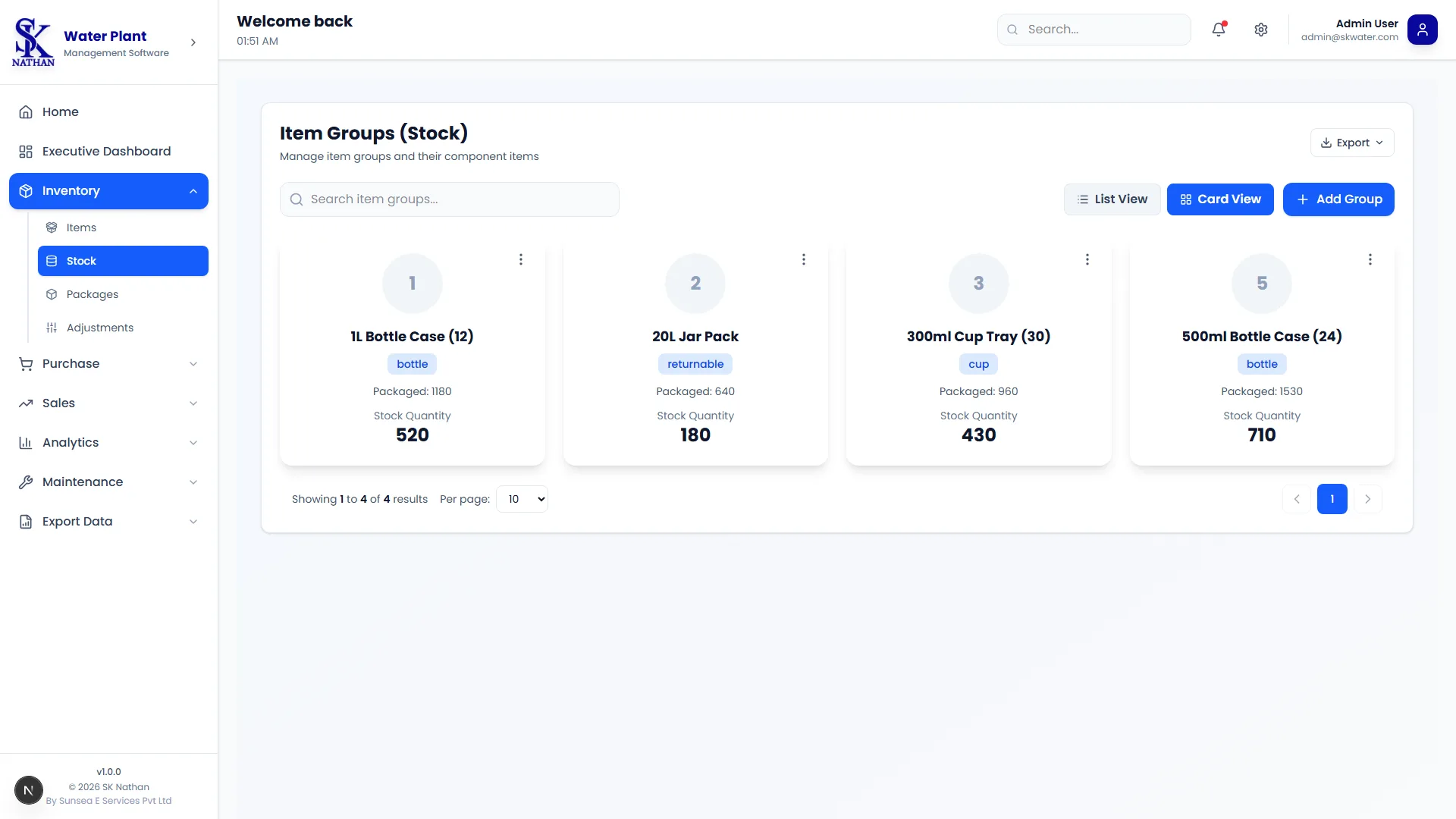
03 // INVENTORY TRACKINGInventory Stock Levels
Granular stock monitoring for raw water cans, caps, labels, and chemical supplies.
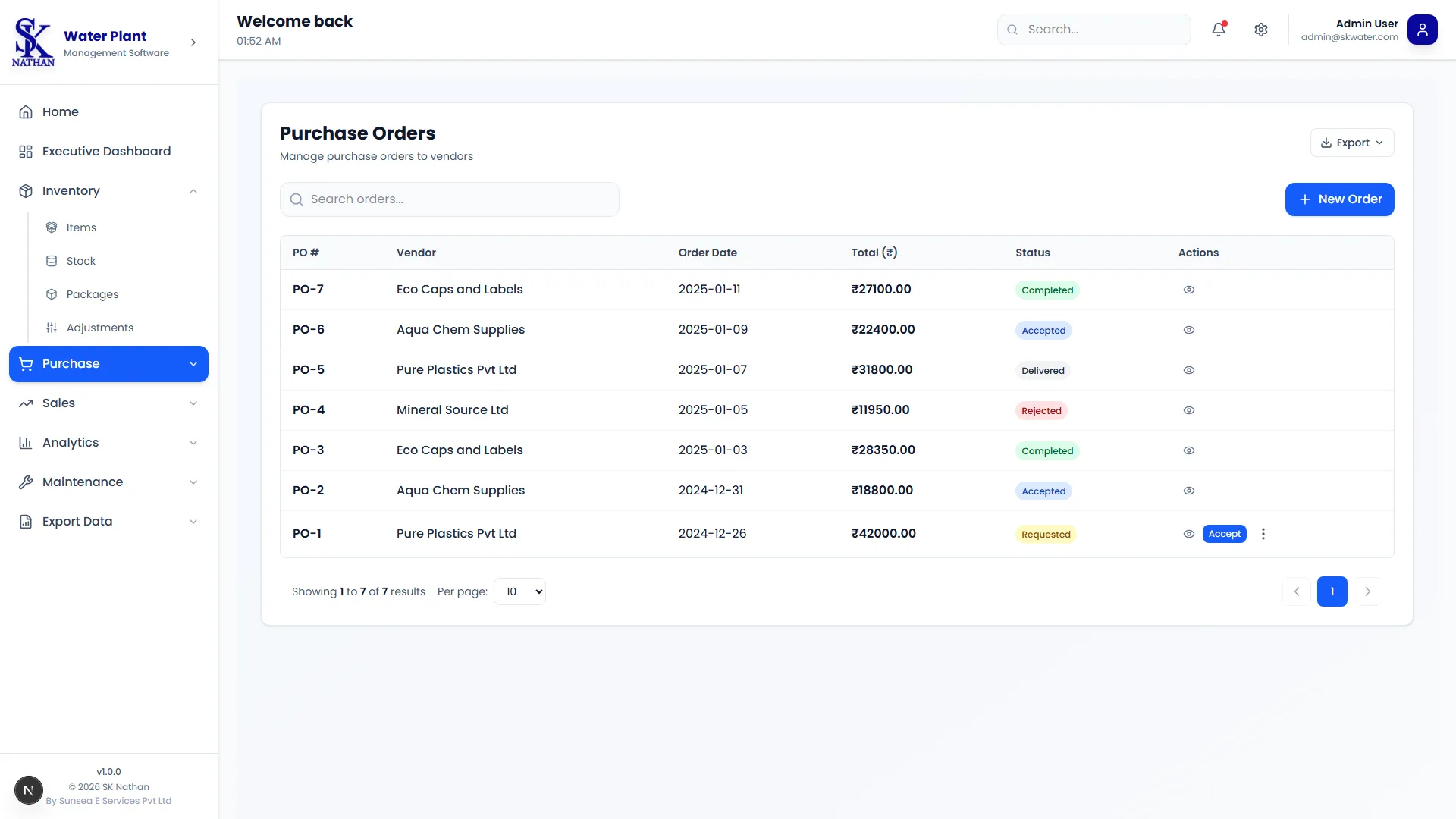
04 // PURCHASE ORDERSPurchase Order Management
Automated supplier requisition and purchase order lifecycle management.
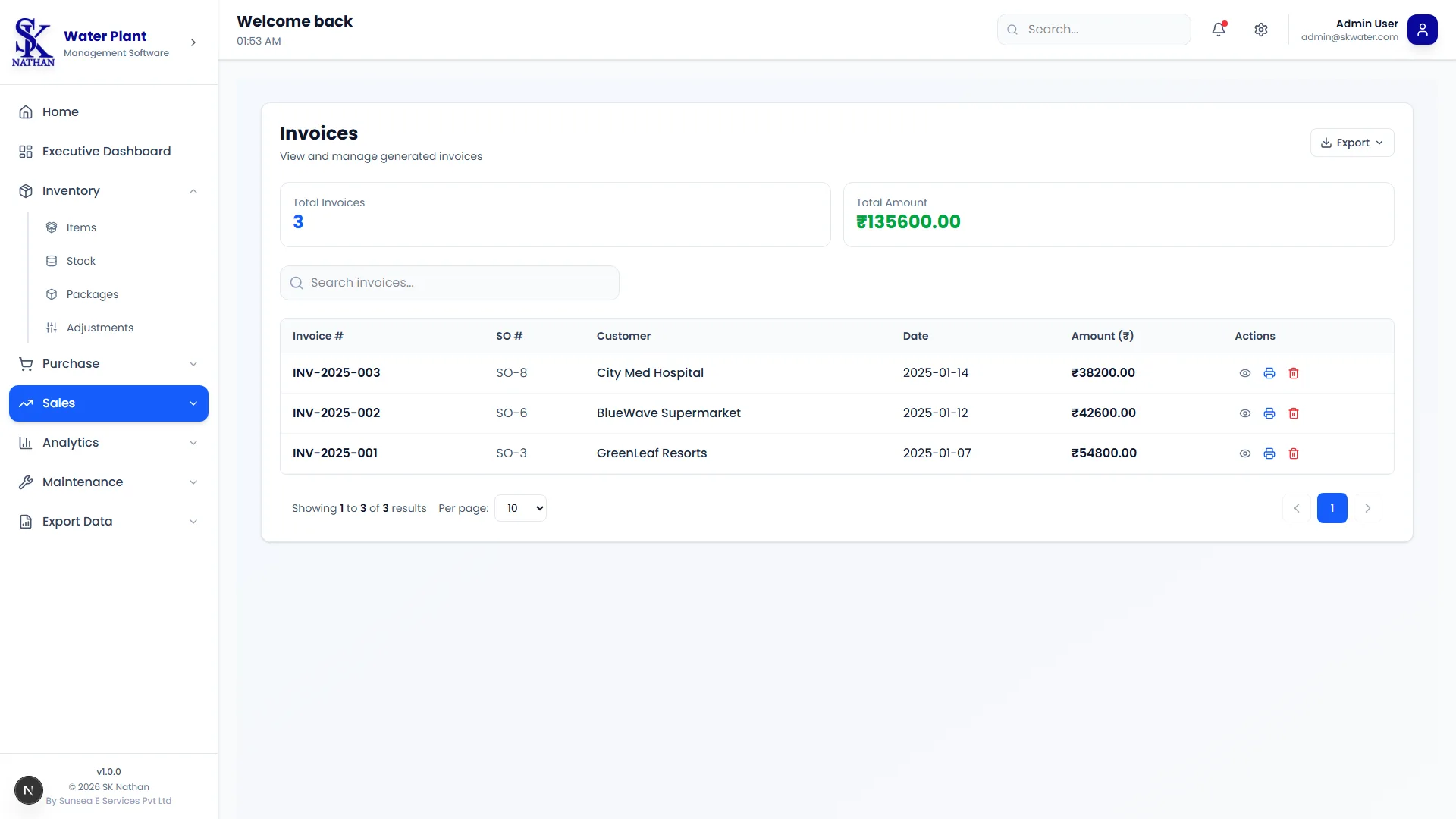
05 // SALES INVOICESSales Invoicing & Billing
Instant invoice generation and payment settlement tracking for commercial distributors.
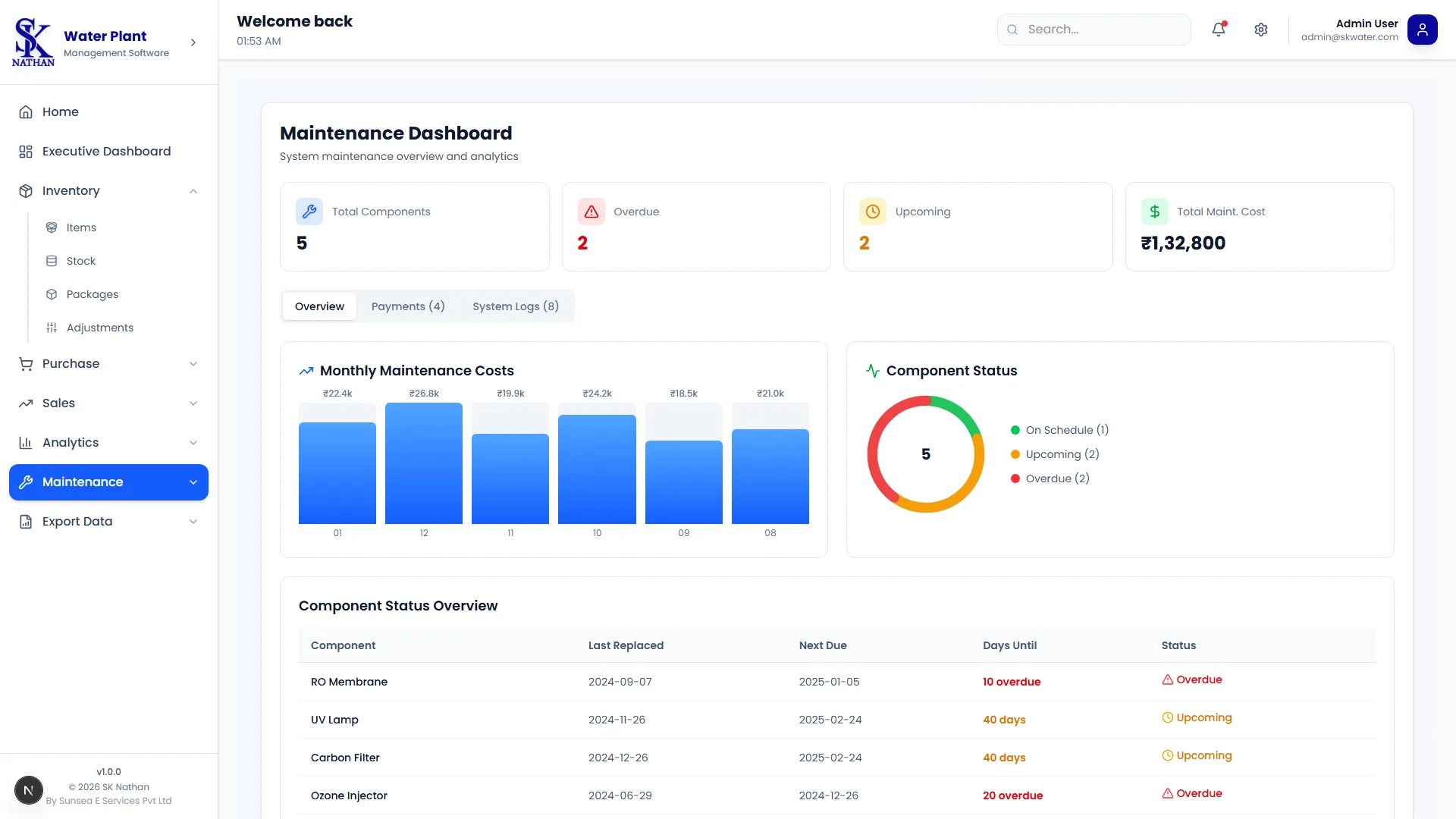
06 // PLANT MAINTENANCEMembrane & Plant Maintenance
Scheduled RO filtration servicing logs and sanitation audit schedules.