CivicConnect
Civic complaint and municipal-updates platform with an AI triage chatbot, running as a decoupled event-driven mesh.
Role
Systems design & implementation across the service mesh
Timeline
Shipped, 2025
Stack
- Go·
- Node.js·
- Python·
- Flutter·
- Vue.js·
- Docker·
- Kubernetes·
- RabbitMQ
The problem
Civic complaint systems typically fail in one of two ways: they're a form that goes into a black hole, or they're a monolith where one overloaded module (usually the notification or classification piece) takes the whole system down during a spike. Municipal complaint volume spikes hard around specific events — a burst water main, a storm — exactly when reliability matters most.
Why event-mesh
Four services — intake, triage, routing, and citizen-facing status — talk only through a RabbitMQ event bus, never directly to each other. That decoupling means the triage service choking on a spike degrades the system gracefully: intake still accepts complaints, they queue, and they get processed as capacity allows, instead of the whole platform going down because one component fell over.
Where AI fits
A Gemini-backed chatbot handles first-pass triage — helping citizens articulate the actual issue and routing it to the right municipal queue before a human ever sees it. It's a feature inside the pipeline, not the product itself; the event-mesh architecture is what makes the system reliable, the chatbot just makes intake faster.
What's still open
Very high-volume bursts still cause temporary queue backlogs — the mesh degrades gracefully but doesn't yet scale itself automatically. Auto-scaling for the queue consumers is in progress to close that gap.
Project Gallery
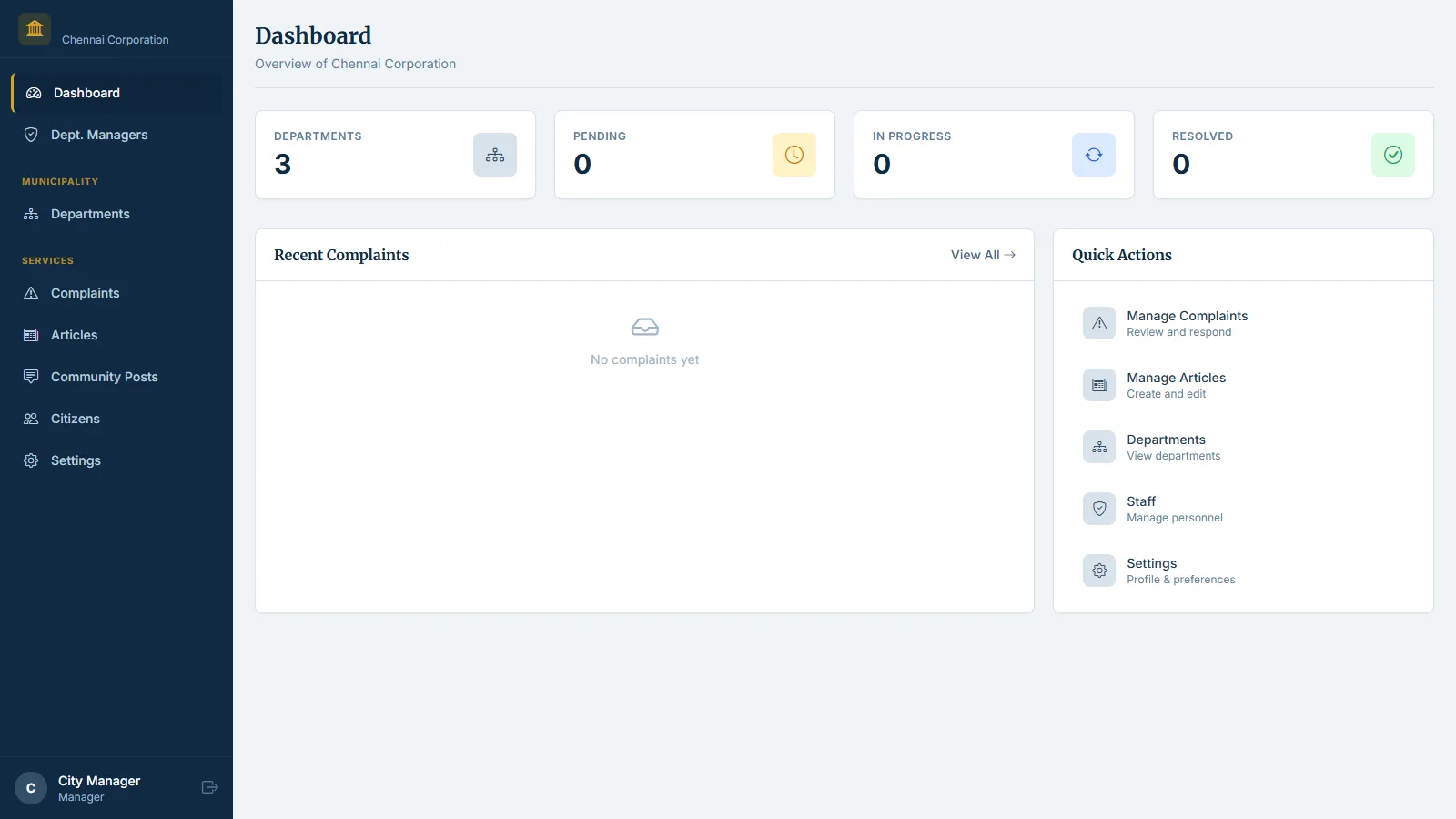
01 // REACT + TAILWIND ADMIN PORTALWard Command & Dispatch Center
Real-time SLA monitoring, citizen grievance routing, and automated department dispatch dashboard for municipal officers.
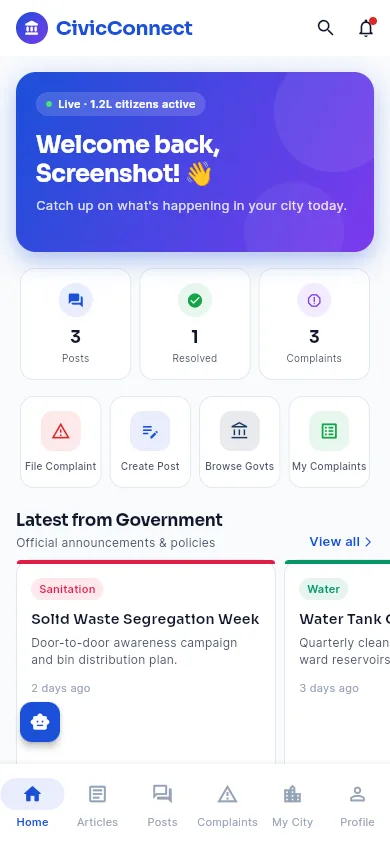
02 // FLUTTER CITIZEN GRIEVANCE APPDirect Citizen Engagement
Geo-tagged incident reporting, live resolution tracking, and broadcast notifications for municipal water and sanitation alerts.
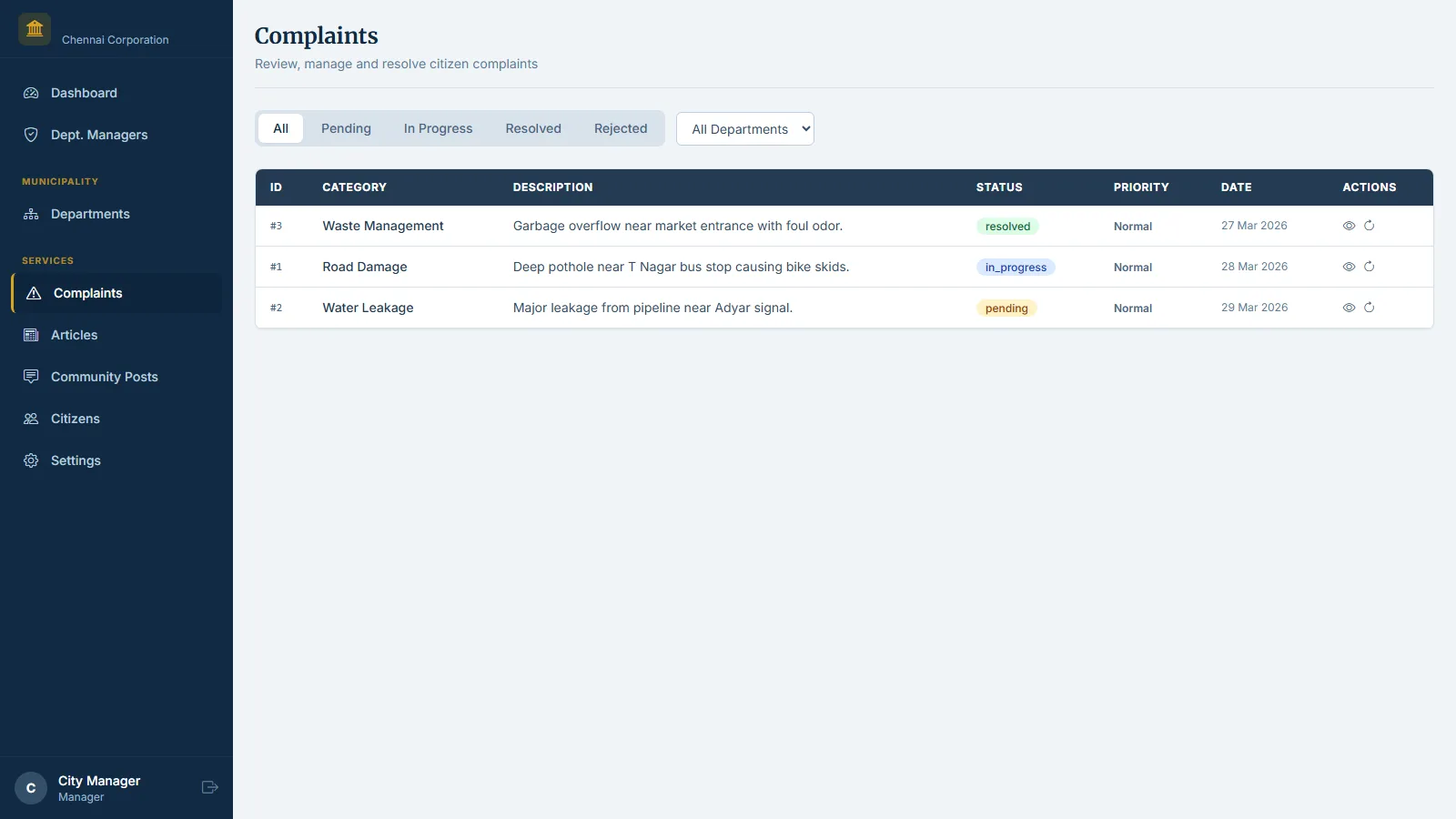
03 // GRIEVANCE ROUTINGAdmin Complaints Triage
Centralized department routing and ticket SLA escalation management.
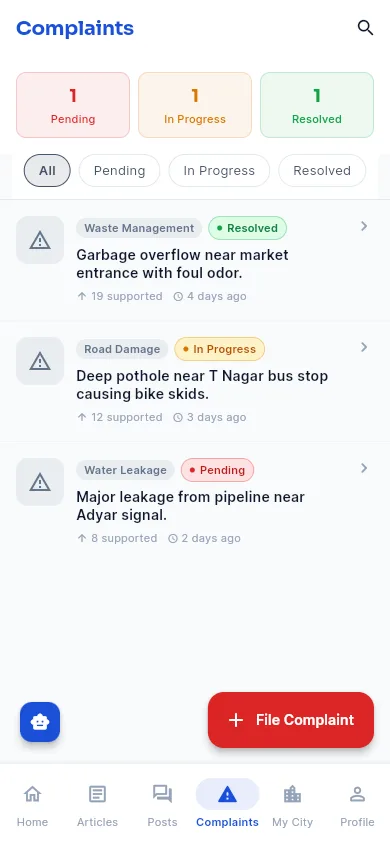
04 // MOBILE SUBMISSIONMobile Incident Reporting
Citizen camera attachment and GPS coordinate tagging for street anomalies.